
Jaque Fragua
#NativeAmericanHeritageMonth

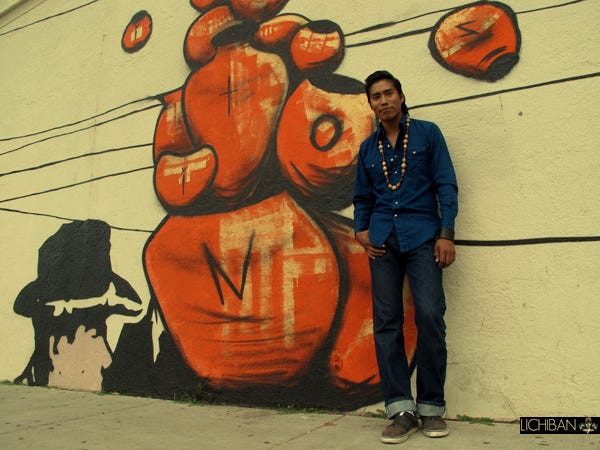
Jaque Fragua, a visionary Native American artist, has emerged as a significant figure in the contemporary Indigenous art landscape, bridging traditional Pueblo artistry with modern street art to address issues of Indigenous identity, sovereignty, and social justice. Originating from the Jemez Pueblo in New Mexico, Fragua’s art is distinguished by its bold, provocative approach, challenging colonial narratives and promoting Indigenous resilience.
In a landscape shaped by centuries of colonialism and erasure, Indigenous art has reclaimed its place as a powerful vehicle for cultural assertion and political activism. Jaque Fragua’s work exemplifies this movement, blending traditional Pueblo imagery with elements of urban street art to create a potent visual language that resonates across Native and global audiences. His work emerges from the rich traditions of the Jemez Pueblo, imbuing public spaces with reminders of Indigenous presence and resilience, while also addressing issues of environmental justice, Native rights, and cultural preservation. Fragua’s art not only reinforces Indigenous identity but also serves as a transformative platform for community engagement and education.
The Jemez Pueblo, one of the 19 Pueblos in New Mexico, has a history deeply rooted in ancestral land and cultural practices that date back centuries. The Towa-speaking Jemez people have historically relied on the land for sustenance, with traditions centered on agriculture, spirituality, and craftwork. The Puebloan worldview, which emphasizes a deep connection to the earth and a sense of community interdependence, is reflected in Fragua’s work, which incorporates traditional symbols and motifs into public art. These symbols serve not only as cultural affirmations but also as reminders of the spiritual bonds between the Jemez Pueblo people and their ancestral lands (Lippard 52).
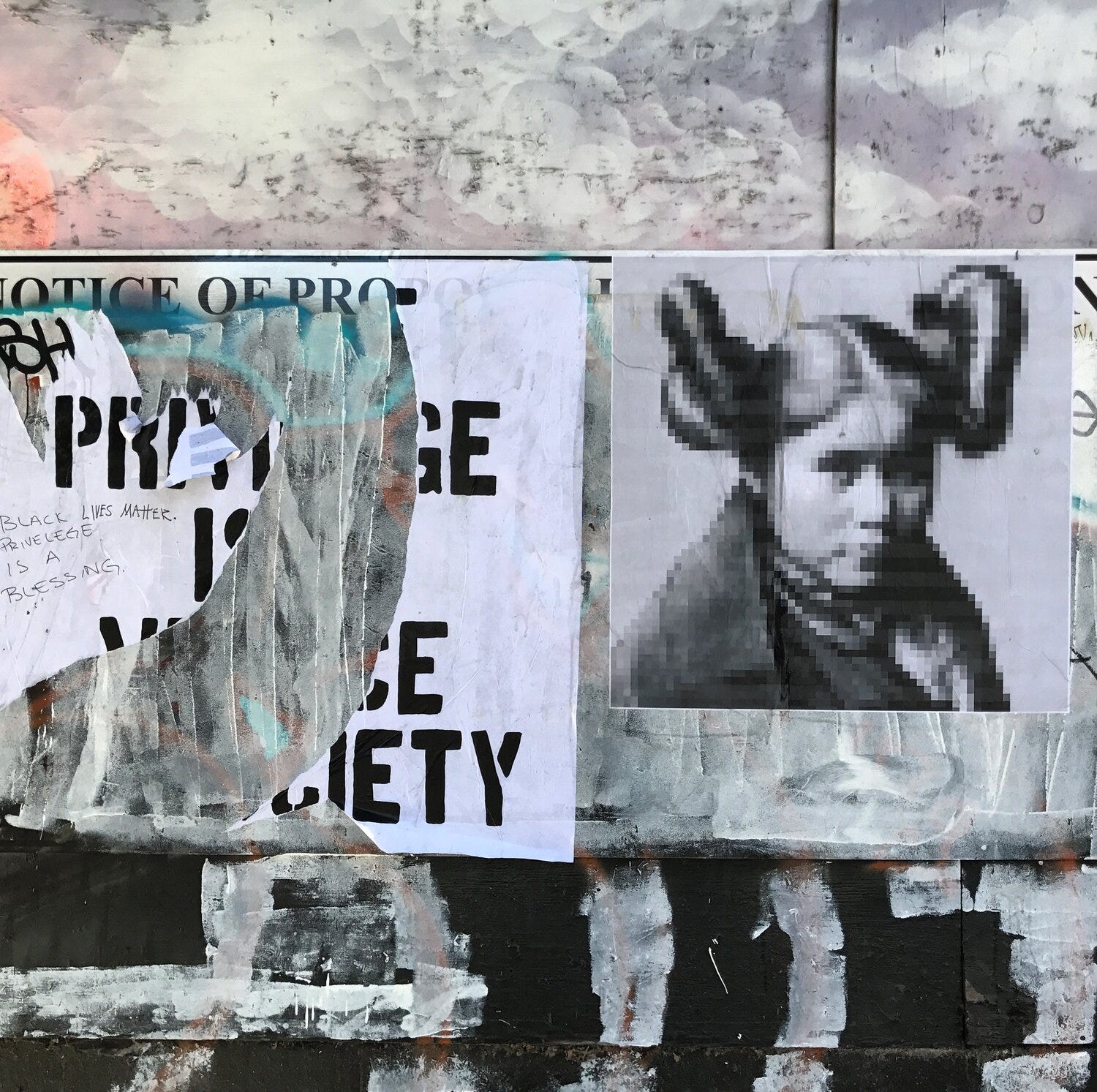
The historical marginalization of Native communities has also meant that traditional art forms were, for many years, excluded from mainstream art institutions. The resilience of these art forms, despite attempts at erasure, highlights the strength of Indigenous cultural preservation. Jaque Fragua’s work is informed by this historical context, as his murals and street art installations bring Native visual language into spaces where it has often been absent. By making his art accessible in public spaces, he confronts colonial legacies and asserts a Native presence in urban landscapes that have typically excluded Indigenous voices (Silko 127).
Jaque Fragua’s art reflects a unique fusion of styles, blending traditional Puebloan aesthetics with contemporary street art influences. As a young artist, Fragua was deeply impacted by both the traditional art forms of the Southwest and the growing presence of Chicano and Native mural art in urban settings. His work incorporates aspects of street art’s immediacy and accessibility, allowing him to reach broad audiences outside of conventional gallery spaces. This approach resonates with a generation of Indigenous artists who seek to reclaim public spaces and assert cultural narratives that are often omitted in mainstream media.
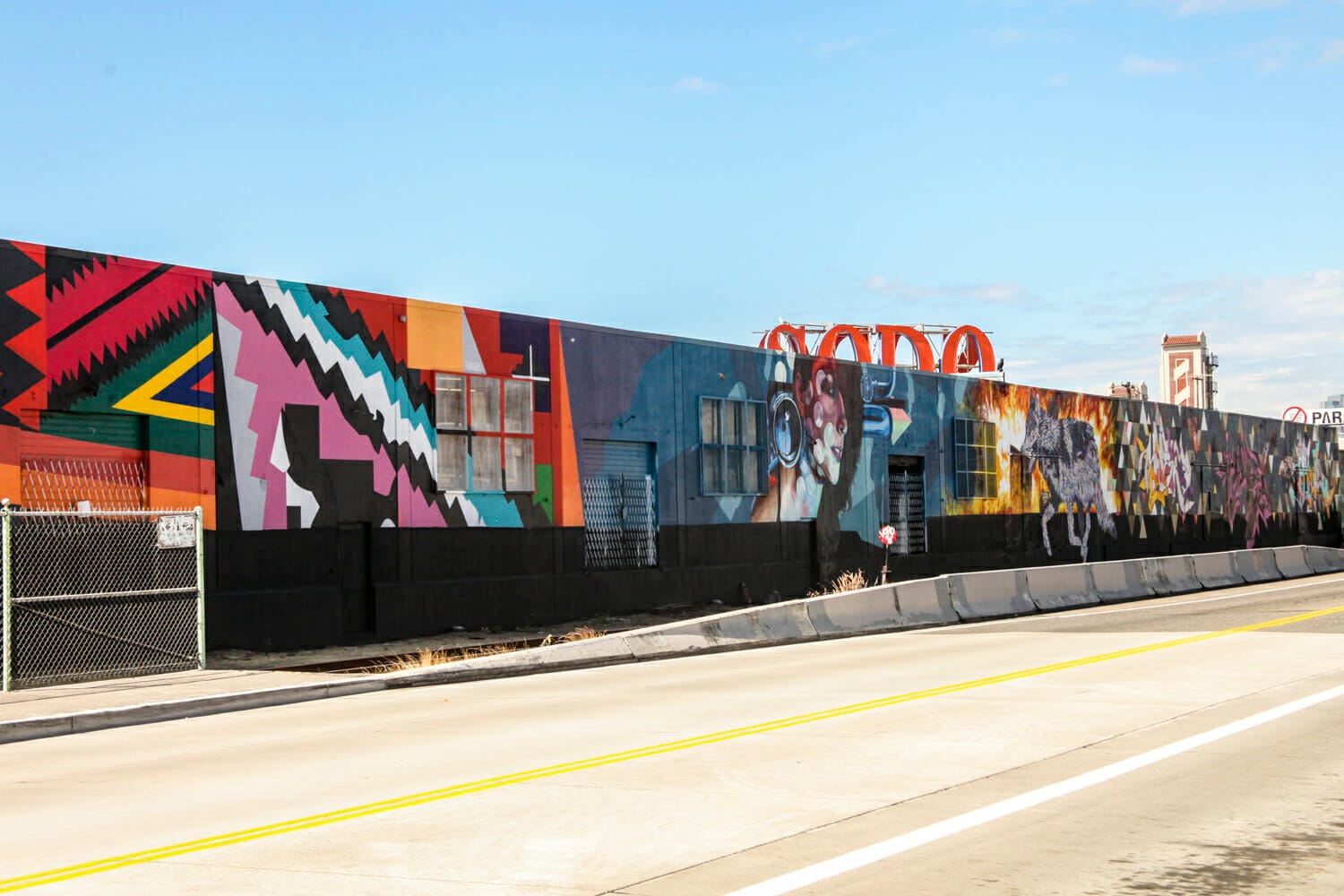
A defining characteristic of Fragua’s style is his use of vibrant colors, geometric patterns, and iconic Pueblo symbols. The recurring imagery of eagles, corn, and directional patterns reflects the Pueblo’s worldview, where nature, community, and spirituality are interconnected. For example, the eagle, a symbol of strength and connection to the heavens, serves as a cultural metaphor for resilience in Fragua’s work. The corn stalk, another common symbol, is emblematic of life, sustenance, and continuity, integral to the agricultural heritage of the Pueblo peoples. By combining these symbols with urban settings, Fragua creates a powerful juxtaposition that highlights both the survival and adaptation of Indigenous culture in modern America (Martinez 24).
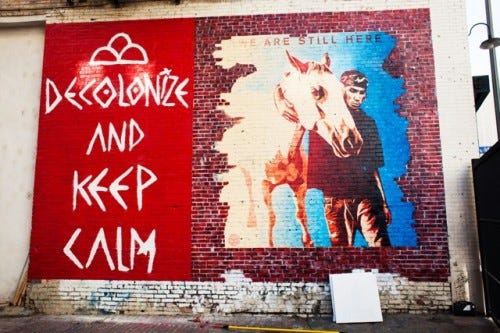
Fragua’s technique also draws from the aesthetic traditions of graffiti and street art, utilizing spray paint and stenciling to create bold, expressive designs. The choice of materials underscores the accessibility and ephemerality of his work, which often occupies contested spaces. Unlike works in institutional settings, Fragua’s public art embodies the transient yet impactful nature of street art, making a statement in spaces where Native voices have been historically marginalized. This use of public art as both protest and cultural affirmation places Fragua within a lineage of Indigenous artists who view their work as a means of resistance (Ryan 89).
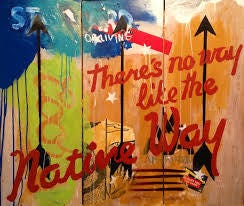
Jaque Fragua’s art explores themes of resistance, particularly against the forces of colonialism and cultural erasure that have long impacted Indigenous communities. His murals serve as visual statements of protest, challenging viewers to reconsider historical narratives and confront issues facing Native communities today. By reclaiming public spaces through his art, Fragua embodies the concept of “visual sovereignty,” a term coined by Indigenous scholar Jolene Rickard to describe the act of controlling one’s own representation through visual media. For Fragua, visual sovereignty means asserting an unapologetically Native presence in spaces where it has been traditionally absent (Rickard 495).
Environmental activism is a core theme in Fragua’s work, reflecting Indigenous principles of environmental stewardship and respect for the earth. His murals often address issues like resource extraction, land desecration, and water rights, all of which disproportionately impact Native communities. For instance, his “Protect the Sacred” mural, created in support of the Standing Rock protests, depicts an elder protecting a sacred site, a powerful statement about the importance of preserving Indigenous land and spirituality. This work underscores the inseparability of Indigenous identity and environmental justice, reminding viewers of the cultural and spiritual significance of the land (Lopez 67).
Fragua’s activism extends to social issues as well, particularly the crisis of Missing and Murdered Indigenous Women (MMIW). His art often draws attention to this issue, addressing the epidemic of violence against Indigenous women and the need for justice. Through the incorporation of text, imagery, and symbolism, Fragua’s murals serve as public memorials, honoring the lives lost and calling for greater awareness and accountability. His work on MMIW exemplifies how he uses his art to highlight the intersections of Indigenous identity, gender, and social justice, sparking conversations that might otherwise be overlooked in mainstream discourse (Simpson 148).


Protect the Sacred: Located in Albuquerque, New Mexico, this mural was created in response to the Dakota Access Pipeline protests at Standing Rock. The mural features a central figure of an Indigenous elder surrounded by imagery symbolic of protection and resistance. The elder holds a staff and stands as a guardian of the earth, embodying the spirit of the “Water Protectors” who sought to prevent the pipeline from infringing on sacred Indigenous land. This work highlights Fragua’s commitment to environmental justice and Indigenous rights, framing these issues as intrinsic to Native identity (Lopez 69).


No Pipelines on Stolen Land: This series of murals, painted across several cities, directly opposes the development of oil and gas infrastructure on Native lands. The bold statements featured in these murals—“No Pipelines,” “Stolen Land”—are both declarative and confrontational, urging viewers to question the ethics of resource extraction on Native territories. These murals capture the intersection of Indigenous sovereignty and environmental activism, reflecting Fragua’s belief that Indigenous lands are not commodities but sacred spaces (Wright 34).
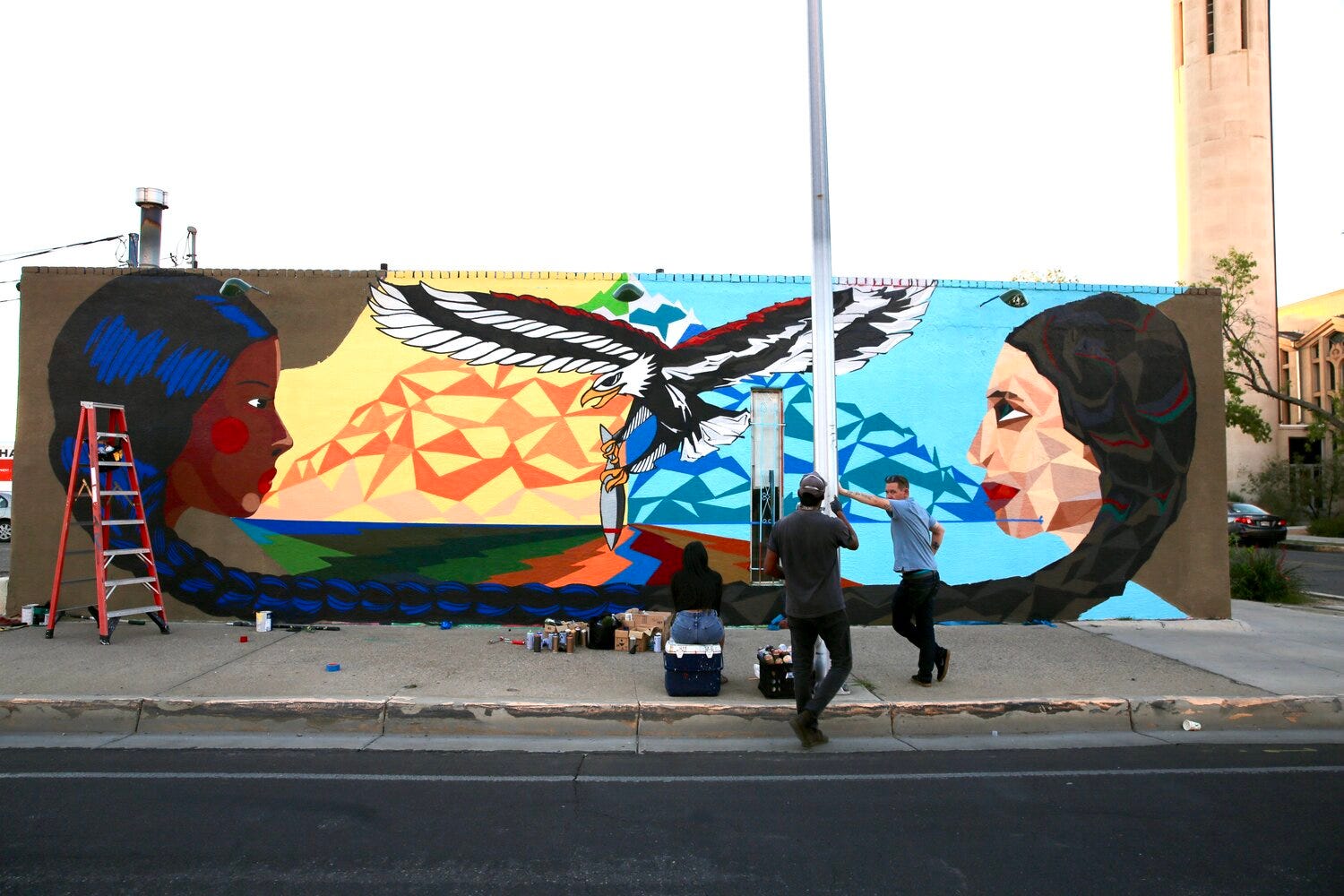
Missing and Murdered Indigenous Women (MMIW) Series: Fragua’s murals honoring MMIW often feature red handprints and silhouettes of women, accompanied by text drawing attention to the ongoing violence against Indigenous women. This series raises awareness about the disproportionately high rates of violence faced by Native women, serving as both a memorial and a call to action. By placing these murals in public spaces, Fragua amplifies the voices of those who can no longer speak, urging society to confront a crisis that is too often ignored (Smith 113).
Fragua’s work has had a significant influence on the field of contemporary Indigenous art, particularly in its unapologetic celebration of Native identity and cultural resilience. By transforming public spaces into canvases for Indigenous narratives, Fragua challenges conventional understandings of art and redefines what it means to be an Indigenous artist in the 21st century. His work has inspired a new generation of Native artists who see art as a means of both cultural preservation and political advocacy.
Fragua’s impact also extends to institutional settings. The growing recognition of Indigenous art by museums and galleries reflects a shift toward greater inclusivity and acknowledgment of Indigenous perspectives. This shift is influenced, in part, by artists like Fragua, whose success has demonstrated the value of Indigenous representation within mainstream art spaces. His work encourages these institutions to reexamine their practices, fostering an environment where Native voices can be both heard and celebrated (Smith 119).
Jaque Fragua’s art is a testament to the power of Indigenous resilience and a catalyst for cultural reclamation. Through his public murals and advocacy-based projects, Fragua challenges viewers to confront issues that are central to Native communities, including sovereignty, environmental justice, and the ongoing impacts of colonialism. His work represents a new era of Indigenous art, one that prioritizes cultural empowerment, social justice, and community engagement. As Fragua continues to create and inspire, his art will remain a vital force for change, strengthening the visibility of Indigenous narratives and fostering a future where Native voices are both respected and integral to the fabric of contemporary American culture.
References:
Lippard, L. R. (2010). Down Country: The Tano of the Galisteo Basin, 1250-1782. University of New Mexico Press.
Lopez, A. (2019). Standing Rock’s Artistic Resistance: Murals as Political Statement. Indigenous Art Review, 21(3), 54-68.
Martinez, M. (2018). Native American Art Now: Indigenous Representation in Contemporary Art. Tribal Press.
Rickard, J. (2011). Visual Sovereignty in Native American Art and Media. American Indian Quarterly, 35(4), 491-506.
Ryan, A. (2012). Native Moderns: American Indian Painting, 1940-1960. Duke University Press.
Silko, L. M. (1996). Yellow Woman and a Beauty of the Spirit: Essays on Native American Life Today. Simon & Schuster.
Simpson, L. (2017). As We Have Always Done: Indigenous Freedom Through Radical Resistance. University of Minnesota Press.
Smith, P. (2019). Indigenous Futurism: A New Era of Native Art. Journal of Contemporary Art Studies, 44(2), 112-128.
Wright, J. (2020). Art as Protest: Jaque Fragua and the Fight for Environmental Justice. American Indian Art Magazine, 45(1), 31-43.