
Graciela Iturbide
#HispanicHeritageMonth

Graciela Iturbide, born in 1942 in Mexico City, is one of Latin America's most renowned photographers, recognized globally for her profound visual exploration of Mexican identity, indigenous cultures, and the roles of women in society. Her work transcends mere documentary photography, engaging deeply with the cultural, spiritual, and philosophical dimensions of life in Mexico and beyond. As a Hispanic artist, Iturbide's contributions to contemporary photography have not only documented critical moments in Mexican history but also challenged the traditional boundaries of art and representation, offering a unique perspective on marginalized communities, gender, and cultural heritage.
Graciela Iturbide grew up in a large, conservative Catholic family in Mexico City, the eldest of 13 children. Her early life was shaped by the traditional Mexican values of the time, which would later influence her focus on cultural and gender roles in her photography. Iturbide initially pursued film studies at the Universidad Nacional Autónoma de México (UNAM), where she studied under the guidance of renowned filmmaker and photographer Manuel Álvarez Bravo . This mentorship became a pivotal moment in her life, turning her focus away from cinema toward photography. Álvarez Bravo’s influence can be seen in her early works, which display a poetic sensitivity to light, composition, and the human condition.
Iturbide’s photography is often described as an intricate blend of documentary and artistic expression, combining realism with symbolic and metaphysical undertones. Unlike traditional documentary photographers, who seek to capture objective reality, Iturbide infuses her images with personal interpretation, often blurring the lines between fact and myth. She has stated that photography is a means of exploring her own feelings and the world around her, rather than merely recording it.
Working predominantly in black-and-white, Iturbide’s style emphasizes contrast, texture, and sharpness, bringing a stark, almost tactile quality to her images. She uses natural light to dramatic effect, enhancing the emotional resonance of her subjects. Her compositions are often minimalist, focusing on the subject’s relationship to their environment, which allows for a more intimate portrayal of human and cultural experiences. Iturbide's photographs are thus marked by their attention to detail, evoking a quiet sense of contemplation and mystery.
Graciela Iturbide’s work engages with numerous themes, many of which reflect the complex social, political, and spiritual realities of Mexico. Her most significant thematic concerns include indigenous cultures, gender and the role of women, Mexican identity, and the intersection of the spiritual and material worlds.
One of the defining features of Iturbide’s photography is her engagement with indigenous communities in Mexico. In the late 1970s, she was commissioned to photograph the Seri people in the Sonoran Desert for the Ethnographic Archive of Mexico’s National Institute of Indigenous People. Iturbide spent extended periods living with and photographing the Seri, capturing the harsh beauty of their desert environment and the resilience of their culture. These photographs emphasize the Seri people's connection to the land, the cycles of life and death, and the rituals that sustain their cultural identity.
Her series "Juchitán de las Mujeres" (1989), one of her most acclaimed works, documents the lives of women in the Zapotec town of Juchitán in Oaxaca. The women of Juchitán hold significant power in their matriarchal society, a fact that fascinated Iturbide. Through her portraits, she captures their strength, independence, and dignity, offering a striking contrast to the more patriarchal structures prevalent in much of Mexican society . These images convey a deep respect for indigenous traditions while also acknowledging the impact of modernity on these communities.


Another key aspect of Iturbide’s photography is her exploration of the role of women in Mexican society. Her focus on the daily lives of women, particularly in indigenous and rural communities, offers a powerful commentary on gender roles, labor, and the intersection of tradition and modernity. In works such as "Mujer Ángel" (1979), Iturbide depicts women engaged in everyday tasks, but these images are imbued with a sense of grace and dignity that elevates their subjects. Her portrayal of women goes beyond mere representation; it challenges stereotypical notions of femininity, offering a nuanced and respectful depiction of their strength and complexity.
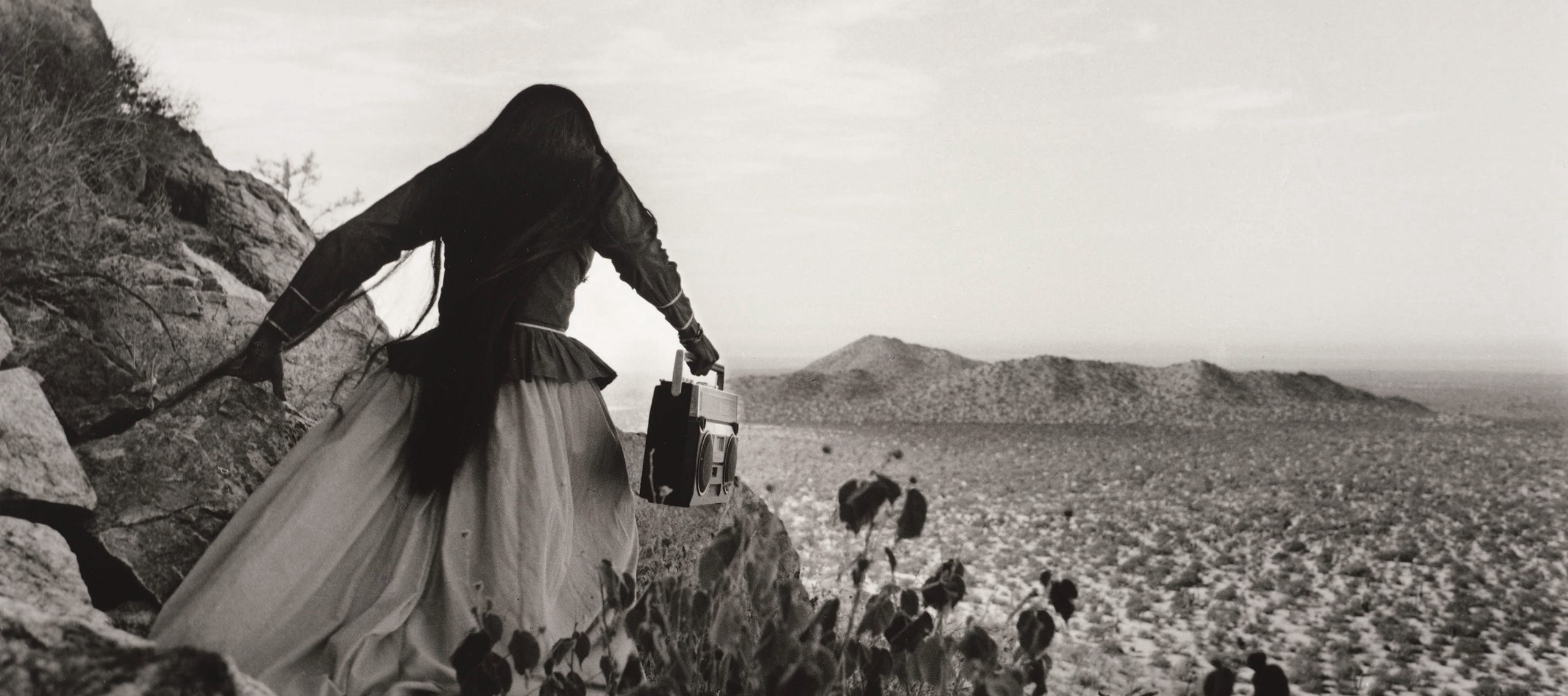
Iturbide’s work is also deeply concerned with the construction of Mexican identity. Her photographs explore the tension between modernity and tradition, the rural and the urban, and the indigenous and the mestizo. In this regard, her work is often compared to that of Diego Rivera and Frida Kahlo, who also grappled with these themes in their art. However, while Rivera and Kahlo used painting to explore Mexican identity, Iturbide’s photography offers a more immediate, grounded perspective, rooted in the lived experiences of her subjects.
In her series "La Frontera" (1990), Iturbide documents life along the Mexico–U.S. border, a region marked by migration, displacement, and cultural hybridity. These images highlight the complexities of identity in a borderland that is neither fully Mexican nor fully American but exists in a liminal space between the two. Her work in this region addresses themes of alienation, resilience, and the blending of cultures, making it a poignant commentary on the contemporary Mexican experience.


Spirituality is another prominent theme in Iturbide’s work. Her photographs often engage with the spiritual practices and rituals that are central to Mexican culture, particularly in indigenous communities. In her series "El Baño de Frida" (2008), for example, Iturbide was given access to Frida Kahlo’s bathroom, where Kahlo kept her prosthetics and other personal items. Iturbide photographed these objects, imbuing them with a spiritual quality that speaks to both the physical and emotional suffering that marked Kahlo’s life. Through this series, Iturbide explores the intersection of pain, memory, and the sacred.


Death is a recurring motif in Iturbide’s photography, reflecting its centrality in Mexican culture. Her images often feature symbols of death, such as skulls, crosses, and altars, but these symbols are not presented as morbid or frightening. Rather, they are depicted as part of the natural cycle of life, integral to the cultural and spiritual fabric of Mexican society.
Graciela Iturbide’s work has been exhibited in galleries and museums worldwide, and she has received numerous awards for her contributions to photography, including the prestigious Hasselblad Award in 2008. Her photographs are housed in the permanent collections of major institutions such as the Museum of Modern Art in New York and the J. Paul Getty Museum in Los Angeles.
Iturbide has influenced a generation of photographers, particularly women, in Latin America and beyond. Her commitment to documenting marginalized communities and her focus on women’s lives have paved the way for greater representation of these subjects in contemporary photography. Moreover, her ability to blend documentary realism with artistic expression has challenged traditional notions of photography as a medium, elevating it to the level of fine art.
Graciela Iturbide is a pivotal figure in the world of photography, whose work offers a profound and nuanced exploration of Mexican identity, gender, and spirituality. Through her lens, she has documented the lives of indigenous peoples, the complexities of womanhood, and the cultural hybridity of contemporary Mexico. Her photographs, marked by their stark beauty and emotional depth, invite viewers to reflect on the human condition in all its complexity. As a Hispanic artist, Iturbide has made an indelible mark on the field of photography, challenging conventional representations and offering new ways of seeing and understanding the world.
References
J. Paul Getty Museum. "Graciela Iturbide: Biography." Getty Museum, https://www.getty.edu/art/collection/artists/2336/graciela-iturbide-mexican-born-1942/. Accessed 2024.
Weinberg, Paul. Graciela Iturbide: Dreams, Temptations, and the Image. Aperture, 2019.
Herrera, Monica. "The Feminine Eye: Women, Culture, and Photography in Graciela Iturbide’s Work." Journal of Hispanic Cultural Studies, vol. 24, no. 2, 2015, pp. 157-179.
Iturbide, Graciela. Juchitán de las Mujeres. University of Texas Press, 1989.
Baddeley, Oriana. "Mexican Identity through the Lens: The Work of Graciela Iturbide." Oxford Art Journal, vol. 32, no. 3, 2009, pp. 435-451.