
Fernando Botero
#HispanicHeritageMonth

Fernando Botero (b. 1932), one of Colombia’s most internationally recognized artists, is known for his unique style of figurative painting and sculpture, which features exaggerated, voluminous forms that he calls "Boterismo." Through his art, Botero has explored a wide range of themes, from everyday life and still life to the critique of political violence and historical events. His works, marked by their characteristic inflated proportions, evoke a sense of humor, absurdity, and irony, yet they often carry deeper meanings related to social commentary, particularly regarding Latin American culture.
Born in Medellín, Colombia, in 1932, Botero grew up in a conservative and devoutly Catholic society. His early exposure to the Baroque art and colonial churches of his native city had a profound influence on his artistic development. Botero’s family was not wealthy; his father died when he was four, leaving his mother to raise him and his siblings on her own. Despite financial constraints, Botero developed a passion for art at a young age, and at 16, he began to study painting.
Botero’s first exposure to formal artistic education came when he attended a school for matadors, but he quickly realized his true passion lay in painting. In the early 1950s, he moved to Bogotá, where he began to exhibit his work, and soon after traveled to Europe. He studied the works of Renaissance masters in Italy and drew inspiration from the frescoes and religious iconography that he encountered during his travels. These early experiences in Europe would leave a lasting impact on his artistic style.
Botero's unique style, often referred to as "Boterismo," emerged as he synthesized the influences from classical European art with his own vision. Characterized by the exaggeration of volume, his figures, whether human or animal, possess a sense of inflated roundness. This distortion of form became Botero’s signature style and is immediately recognizable in both his paintings and sculptures.
Though his work often evokes humor due to the exaggerated proportions, it also carries a deep level of social critique. In an interview, Botero once remarked that his use of large, voluminous forms was not merely for comedic effect but also to give his subjects a sense of monumentality and presence. In this way, Botero challenges the viewer’s perception of beauty and form, breaking away from traditional notions of proportion.
Botero’s early influences included European masters such as Diego Velázquez, Francisco Goya, and Pablo Picasso, but his art remained distinctly Latin American. He drew from Colombian folk traditions and the visual culture of his homeland, and his works frequently include elements of Latin American life, politics, and history. Botero has stated that his works are intended to express the reality of Latin America, with its complexities, contradictions, and extremes.


One of Botero’s central themes is the depiction of everyday life. His paintings often feature scenes from Colombian rural and urban life, capturing the vibrancy and dynamism of the culture. Works such as Dancers (1987) and The Musicians (1991) portray lively moments of celebration, music, and dance. The inflated figures in these scenes add a whimsical quality but also highlight the warmth and exuberance of the culture.
In his still-life paintings, Botero applies the same principles of exaggerated volume. His still lifes, whether they depict fruit, flowers, or everyday objects, are imbued with the same sense of monumentality as his human figures. These works often play with the relationship between form and space, as the exaggerated proportions challenge traditional notions of balance and perspective.


Although Botero’s works are often playful in appearance, they also carry significant social and political messages. His series on Colombian violence, created during the 1990s and early 2000s, represents some of his most politically charged works. These paintings depict scenes of political violence, corruption, and civil unrest in Colombia, reflecting the artist’s deep concern with the state of his homeland. Works such as Massacre in Colombia (2000) and The Death of Pablo Escobar (1999) address the impact of drug cartels and guerrilla warfare on Colombian society. In these works, Botero uses his signature style to create a visual tension between the grotesque and the humorous, forcing the viewer to confront the brutality of violence in an unexpected manner.


Botero’s Abu Ghraib series, created in response to the abuse of prisoners at the Abu Ghraib prison during the Iraq War, further demonstrates his willingness to engage with global political issues. These paintings, which depict the torture and humiliation of prisoners, are characterized by a stark contrast between the inflated, almost cartoonish figures and the horrifying subject matter. In this way, Botero uses his signature style to highlight the absurdity of human cruelty and the dissonance between appearance and reality.
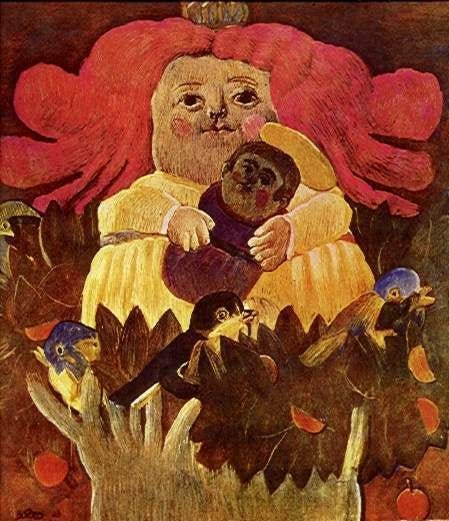
Religion plays a prominent role in Botero’s work, reflecting his early exposure to Catholic imagery in Colombia. Religious themes often appear in his paintings, though they are frequently infused with a sense of irony or satire. For example, in works such as Pietà (1961) and The Virgin of Fatima (1954), Botero presents religious figures in his characteristic style, their exaggerated forms challenging traditional depictions of divine figures. In this way, Botero engages with the power of religious iconography while simultaneously questioning its role in society.


In addition to his paintings, Botero is known for his monumental sculptures, which have been exhibited in public spaces around the world. His sculptures, like his paintings, are characterized by their exaggerated proportions and monumental scale. Works such as The Hand (1992) and The Cat (1990) have been displayed in cities such as Paris, New York, and Bogotá, where they have become iconic symbols of Botero’s artistic vision.
These sculptures, with their playful sense of form and space, invite viewers to engage with the art in a tactile way. Their placement in public spaces reflects Botero’s belief that art should be accessible to all and that it should engage with the public in a meaningful way.
Fernando Botero’s contributions to contemporary art are significant, not only for his distinctive style but also for his engagement with social, political, and cultural issues. Through his unique use of exaggerated proportions, Botero challenges traditional notions of form and beauty while also addressing the complexities of Latin American life. His work, often humorous and playful on the surface, contains deeper layers of meaning that reflect his concern with issues such as violence, corruption, and the role of religion in society.
Botero’s art transcends the boundaries of Colombia, reaching a global audience and influencing generations of artists. His ability to blend humor with social critique, and his commitment to engaging with both the everyday and the extraordinary, make him one of the most important figures in contemporary art.
References
Craven, David. Art and Revolution in Latin America, 1910–1990. Yale University Press, 2002.
Duncan, Michael. “Fernando Botero: Beyond the Familiar Form.” Art in America, vol. 92, no. 2, 2004, pp. 82-85.
Kinsella, Eileen. “Botero's Colombia.” ARTnews, vol. 97, no. 9, 1998, pp. 64-67.
Pérez-Oramas, Luis. Botero: Sculptures. Assouline Publishing, 1998.
Sillevis, John. Botero: Paintings and Drawings. Yale University Press, 2007.
Such a great write up on an often misunderstood artist and his art.