
David Hockney
#NationalRecoveryMonth

David Hockney, one of the most influential British artists of the 20th century, is widely recognized for his contributions to pop art and his exploration of the interplay between perception, space, and time. His vibrant paintings, photography, and later digital works have shaped modern art. However, while his artistic achievements are extensively documented, Hockney’s struggles with addiction, particularly marijuana and cocaine, have often been underexplored in the context of how they influenced his life and work.
Born in 1937 in Bradford, England, David Hockney displayed an early aptitude for art. He studied at the Bradford College of Art before attending the prestigious Royal College of Art in London, where he emerged as one of the foremost figures in the burgeoning British Pop Art movement. His early works, characterized by vivid colors, abstract forms, and personal narratives, quickly gained recognition. Paintings such as A Bigger Splash (1967) exemplify his signature style: vibrant and meticulously structured depictions of swimming pools, Los Angeles landscapes, and domestic interiors.
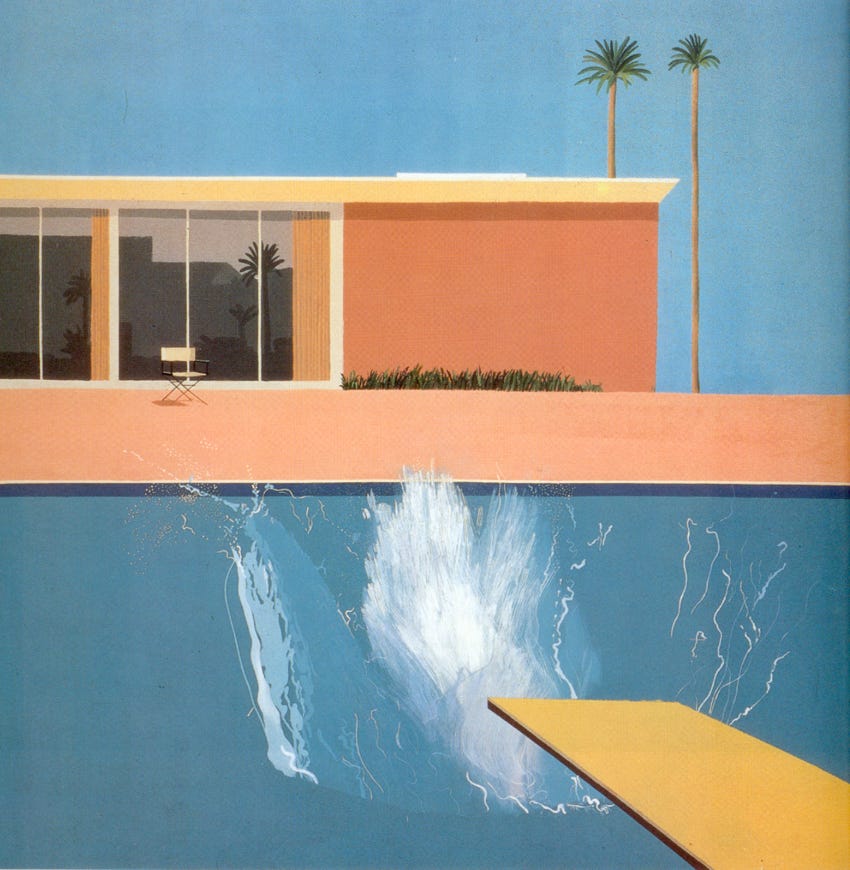
Hockney’s move to California in the 1960s marked a pivotal moment in his career. The warm climate and open spaces influenced his work, reflecting his fascination with light, color, and perspective. However, it was during this time that he also became immersed in the countercultural scene of the 1960s and 1970s, which brought with it increased exposure to drugs, particularly marijuana and later, cocaine.
Marijuana use became increasingly popular during the 1960s and 1970s, particularly within the art world. Many artists turned to it as a means of expanding their minds and exploring new perspectives. For Hockney, marijuana served as both a social lubricant and a creative stimulant. In interviews, he has spoken openly about his use of the drug, particularly during his time in California, where it was more readily available. Hockney suggested that marijuana allowed him to approach his art with a sense of playfulness, loosening rigid creative boundaries and enabling him to explore unconventional ideas.
However, while marijuana may have contributed to Hockney's experimentation with new visual styles and techniques, it also had a more ambivalent impact. Prolonged use of marijuana can result in cognitive impairment, impacting memory and executive function. Hockney's own reflections on his drug use indicate that while marijuana may have helped him tap into more surreal or experimental modes of thinking, it also contributed to periods of inertia and a tendency to procrastinate on projects. Some of his more fragmented works from the 1970s and 1980s, including his photomontages such as Pearblossom Highway (1986), reflect this interplay between heightened creativity and the dissociative effects of marijuana use.
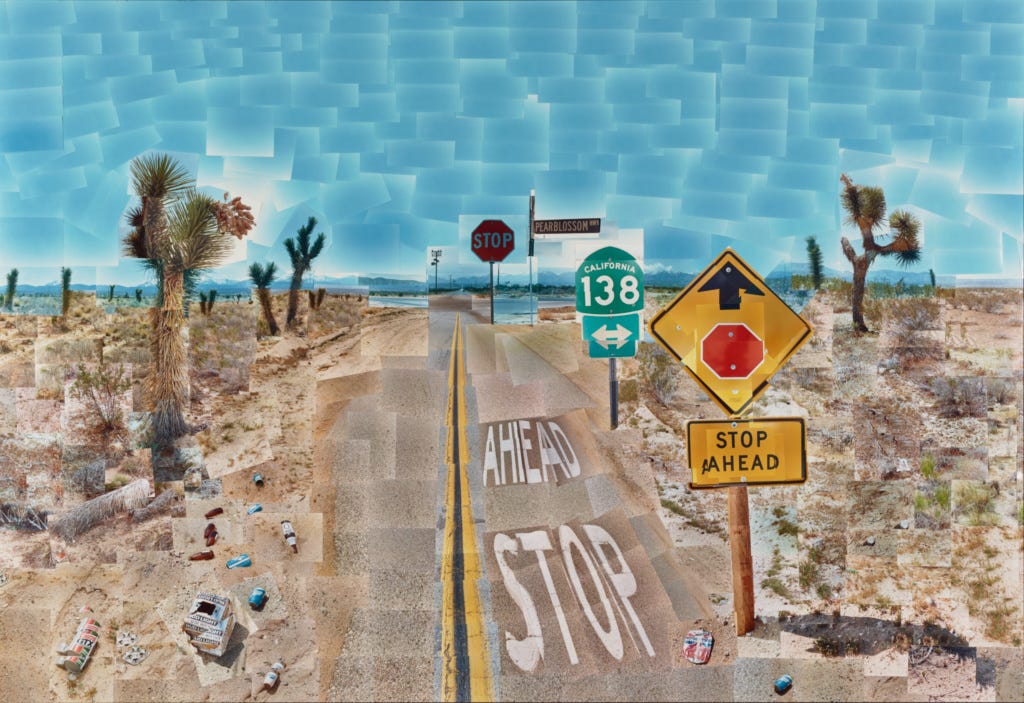
By the mid-1970s, Hockney, like many of his contemporaries, became involved in the Los Angeles party scene, where cocaine use was widespread. Cocaine, with its stimulating and euphoric effects, was often seen as a way to fuel both social and creative energies. However, the drug also carried significant risks, including addiction, paranoia, and physical and mental health decline.
Hockney’s cocaine use, though not as publicly acknowledged as his marijuana habit, is well-documented in accounts of his life during this period. He was part of a social circle that included figures from both the art world and Hollywood, many of whom struggled with substance abuse. The pressures of fame, combined with the lure of the fast-paced social scene, made cocaine a tempting outlet. Though Hockney did not descend into the extreme depths of addiction that some of his peers faced, his use of the drug had lasting effects on his health, contributing to a stroke he suffered in 2012.
While it is difficult to draw direct lines between Hockney’s drug use and specific artworks, the periods during which he was known to be using marijuana and cocaine do coincide with some of his most experimental and, at times, disjointed works. The 1980s, in particular, saw Hockney exploring the intersection of photography and painting, creating large-scale photo collages that challenged conventional perspectives on space and time. Works such as The Desk (1984) and Still Life Blue Guitar (1982) reveal a fragmented, multi-perspective approach that mirrors the dissociative and disjointed nature of drug experiences.


Cocaine, known for its energizing effects, may have also contributed to Hockney’s frenetic creative output during this time. However, the drug's long-term effects likely compounded his physical health issues, most notably his stroke. His works from the 1990s and 2000s reflect a shift toward more contemplative themes, suggesting that Hockney may have been grappling with the aftermath of his addiction and its impact on his body and mind.
Though Hockney’s health struggles later in life were likely exacerbated by his earlier substance use, he has managed to maintain a remarkably productive artistic career. Following his stroke, Hockney moved back to England and largely retreated from the party scene that had characterized much of his earlier life. His work in recent years, including his experiments with digital painting and the iPad, reflects a renewed focus and clarity. These works suggest that, while Hockney’s earlier years were marked by both creative breakthroughs and personal turmoil, he has found a way to continue evolving as an artist.
David Hockney’s legacy as an artist is firmly established, but his struggles with addiction to marijuana and cocaine are an important aspect of his life story. These substances, while contributing to moments of creative innovation, also posed significant challenges to his health and artistic output. Understanding Hockney’s addiction struggles offers a more nuanced view of the artist, revealing the complexities of his relationship with his work, his fame, and his personal life. Despite these challenges, Hockney has continued to push the boundaries of visual art, and his ability to adapt and evolve speaks to his enduring resilience as both an artist and an individual.
References
Gayford, Martin. A Bigger Message: Conversations with David Hockney. Thames & Hudson, 2011.
Weschler, Lawrence. True to Life: Twenty-Five Years of Conversations with David Hockney. University of California Press, 2008.
Livingstone, Marco. David Hockney. Thames & Hudson, 2009.
Hockney, David. Secret Knowledge: Rediscovering the Lost Techniques of the Old Masters. Viking Studio, 2006.
SAMHSA’s National Helpline, 1-800-662-HELP (4357) (also known as the Treatment Referral Routing Service), or TTY: 1-800-487-4889 is a confidential, free, 24-hour-a-day, 365-day-a-year, information service, in English and Spanish, for individuals and family members facing mental and/or substance use disorders. This service provides referrals to local treatment facilities, support groups, and community-based organizations.
National Suicide Prevention Lifeline 1-800-273-TALK(8255). In a crisis, call or text 988 (24/7).