
Carla Hemlock
#NativeAmericanHeritageMonth

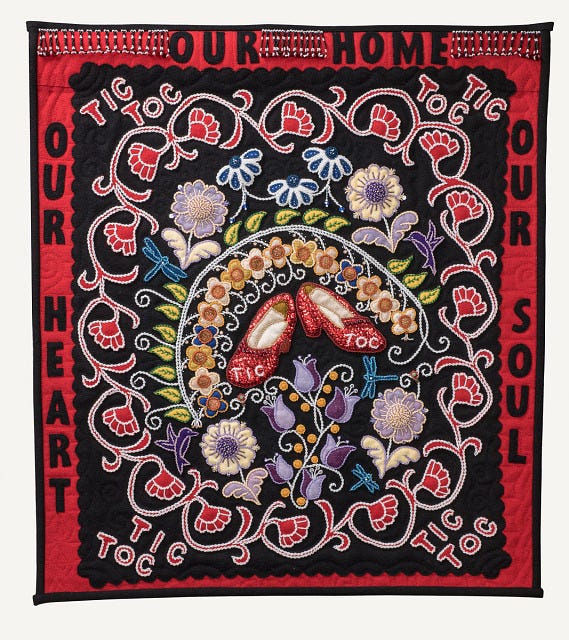
Carla Hemlock, a Kahnawake Mohawk artist, is recognized as a vital voice in Native American art through her distinctive textile work. Hemlock’s quilts merge traditional Haudenosaunee craftsmanship with contemporary activism, addressing issues such as Indigenous identity, cultural resilience, and the lasting effects of colonialism.
Carla Hemlock’s art is an intersection of cultural identity and activism, crafted within the Haudenosaunee tradition of quilting. From the Kahnawake Mohawk Territory in Quebec, Hemlock’s background profoundly influences her art, resulting in works that are both visually captivating and thematically profound. Her use of traditional Mohawk symbols alongside powerful political commentary has cemented her as a crucial figure in contemporary Native American art.

Hemlock’s artistic foundation is rooted in Haudenosaunee culture, where textile arts have long played a role in storytelling and cultural preservation. Traditionally, Haudenosaunee people create quilts and beadwork that symbolize familial ties, heritage, and values. Hemlock was introduced to these skills by her mother, who instilled in her the importance of preserving culture through art (Smith 233). As Hinton notes, “Hemlock’s work builds on a long lineage of Haudenosaunee craftspeople who use textile art as a vessel for oral history and collective memory” (45). This tradition enables Hemlock to transform her quilts into cultural artifacts that honor the past while addressing contemporary issues.
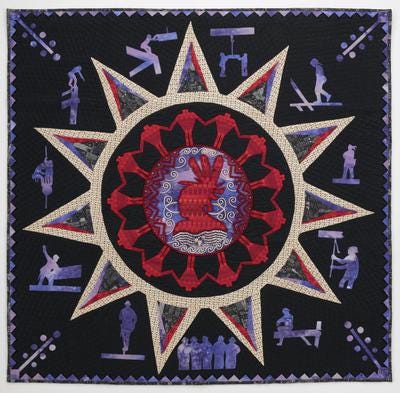
Hemlock’s background in the Kahnawake Mohawk community is evident in her use of Haudenosaunee symbols, such as the Tree of Peace, which signifies unity, strength, and resilience. In many of her quilts, these motifs serve not only as cultural expressions but also as metaphors for Indigenous resistance against colonial oppression (National Museum of the American Indian). By embedding traditional iconography with modern issues, Hemlock’s work connects the past with the present, ensuring that her art remains relevant to contemporary Native audiences.
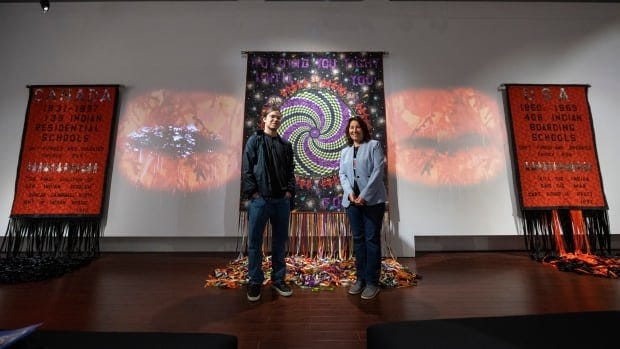
Hemlock’s quilting technique is a fusion of traditional Haudenosaunee methods and contemporary innovation. She incorporates beadwork, silk-screening, and appliqué into her quilts, lending each piece a layered complexity that reflects the multi-dimensional nature of Indigenous experience (Southwestern Association for Indian Arts). Her installation Survivors (2013), a response to the traumatic history of residential schools, is a powerful example of her style, blending symbolic elements with precise craftsmanship. In Survivors, Hemlock includes stitched names and images of survivors, creating a tactile memory space that honors those who endured the hardships of assimilation policies (Smith 240).
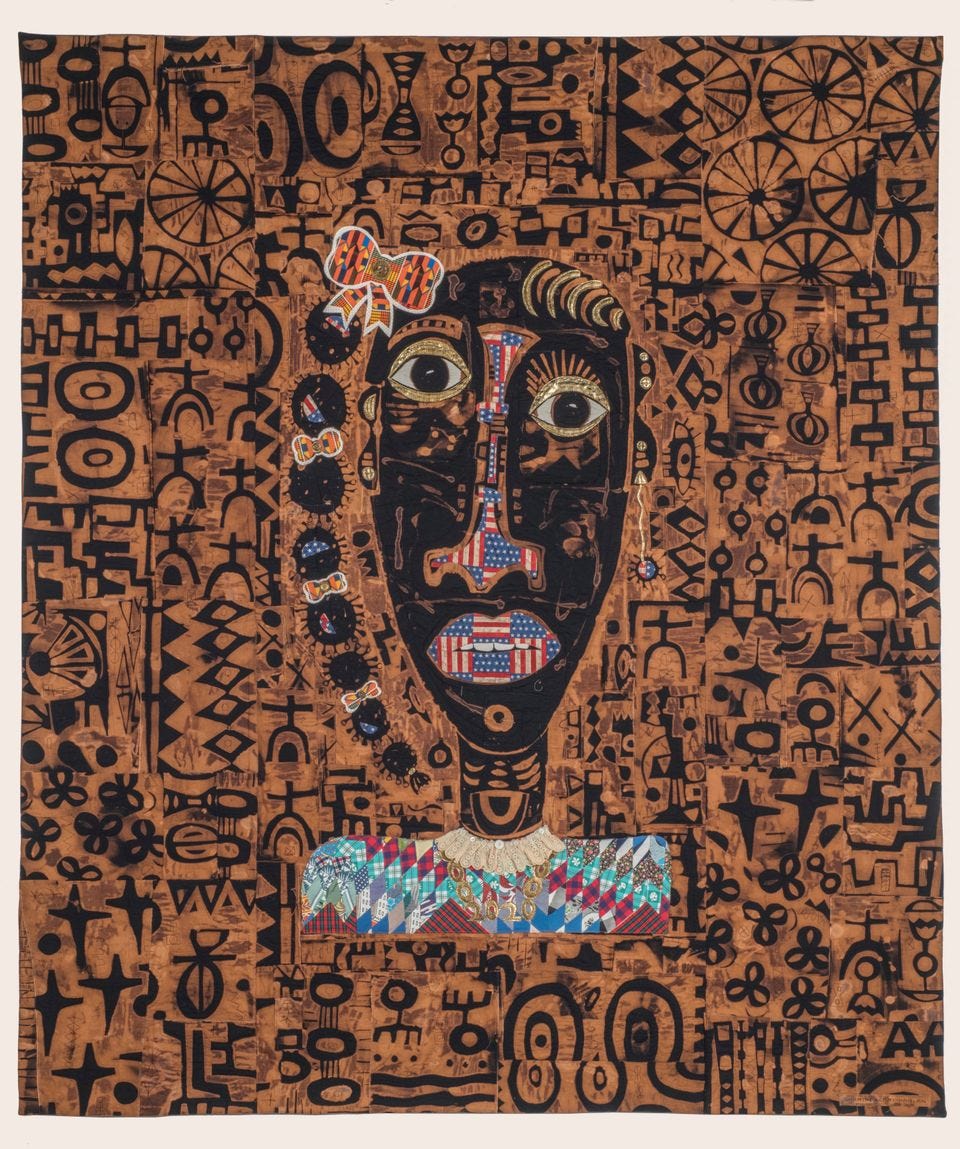
Hemlock’s quilts not only showcase her technical prowess but also reinforce her political messages. For instance, Not Forgotten mourns the Indigenous children who lost their lives in residential schools across Canada. The piece uses traditional color schemes and beading to convey both loss and resilience, offering a powerful visual testimony to a tragic history. As Hemlock stated in an interview, her intention is to “create a space where people can see the impact of these policies, to encourage reflection and perhaps healing” (Smith 245). Through her technique and themes, Hemlock’s quilts bring these narratives to a broader audience, fostering awareness of Indigenous experiences and histories.
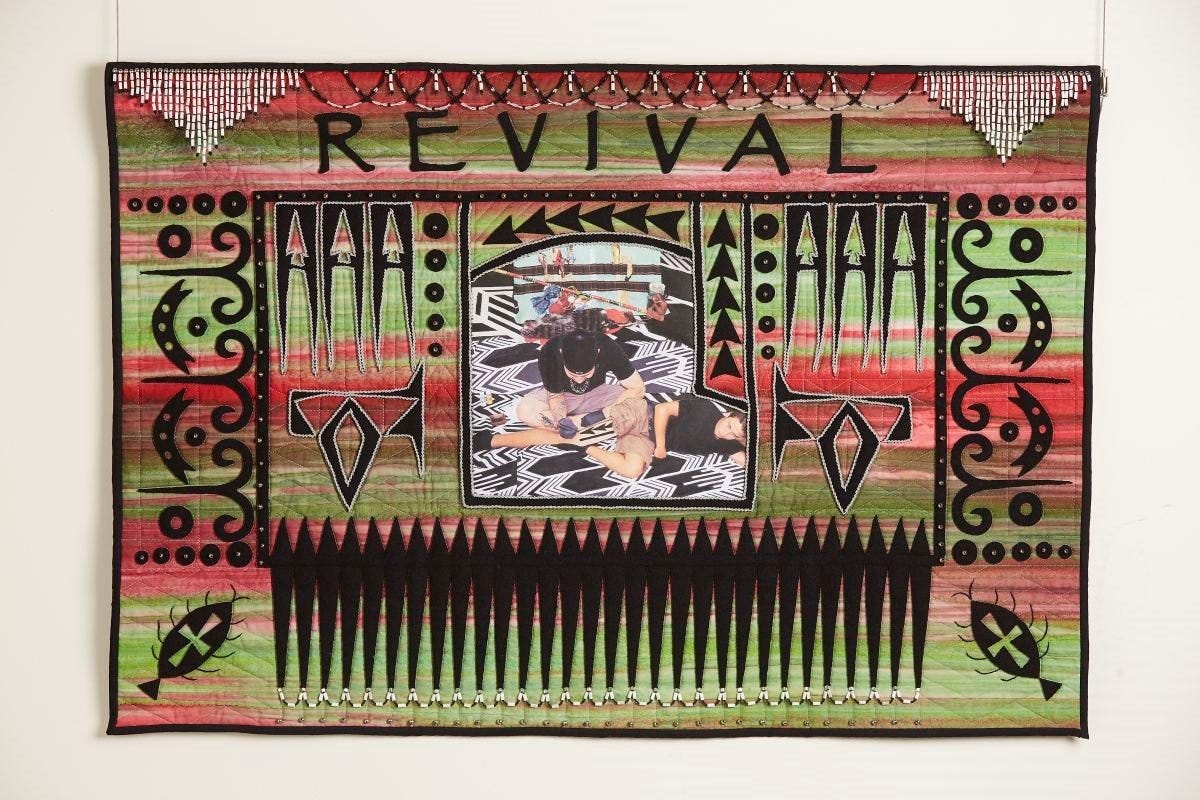
Carla Hemlock’s art is inseparable from her activism. Each piece she creates engages with pressing social issues, including the legacy of colonialism, environmental degradation, and Indigenous sovereignty. Hemlock’s commitment to social justice extends beyond her art; she is involved in various initiatives aimed at empowering Indigenous youth and preserving the Mohawk language (Hinton 47). Her quilts function as “cultural artifacts that document Indigenous struggles for autonomy and respect,” situating her work within a lineage of Native resistance (National Museum of the American Indian).
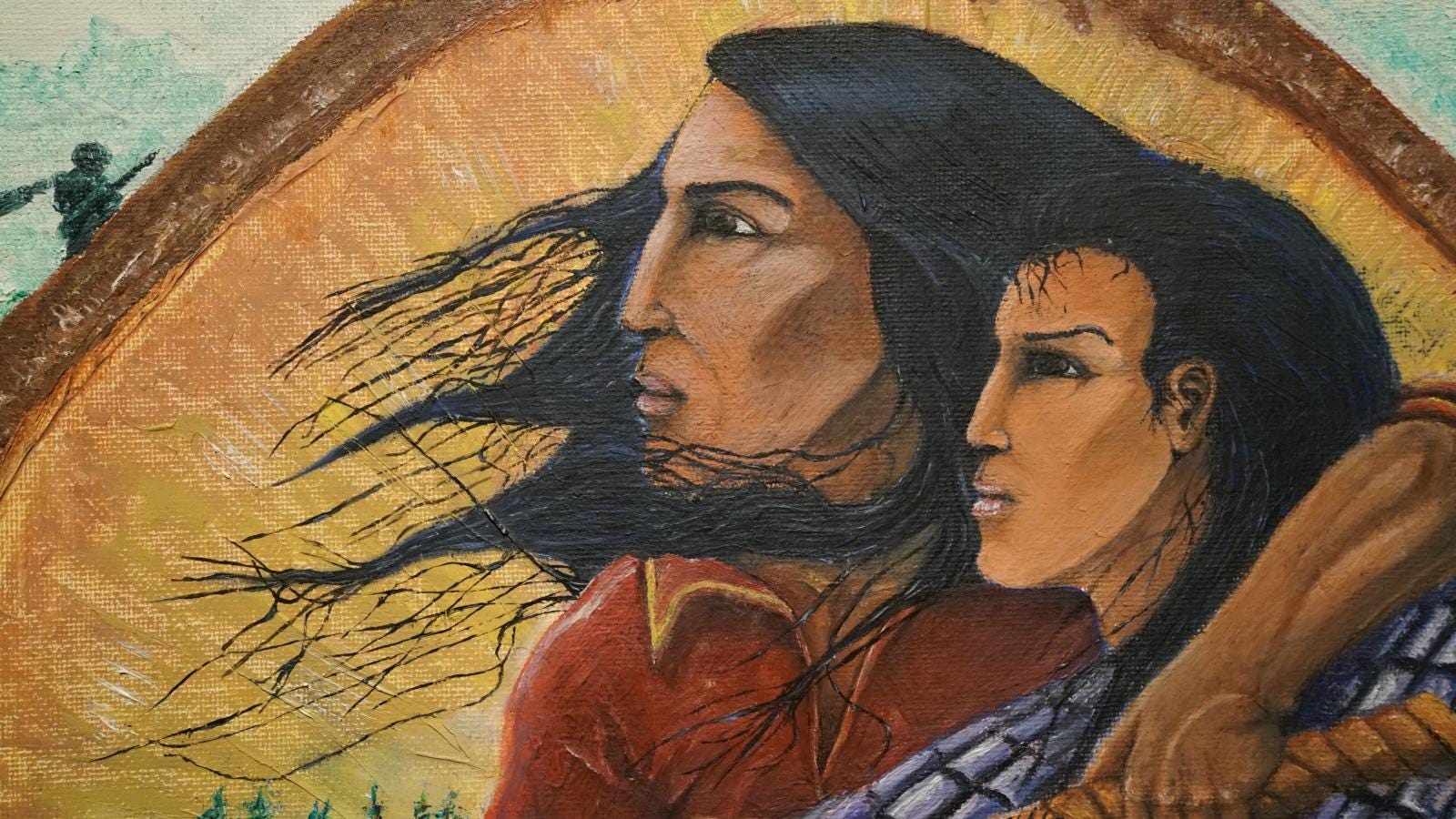
In particular, Hemlock’s focus on environmental justice speaks to a broader Indigenous worldview that respects and values the Earth. Through quilts that depict themes of natural harmony and protection, Hemlock advocates for environmental stewardship as an inherent Indigenous responsibility. Her art often draws attention to the exploitation of natural resources on Native lands, challenging viewers to recognize and resist these injustices. This perspective aligns with her Mohawk identity, where stewardship of the land is a fundamental value (Hinton 48).
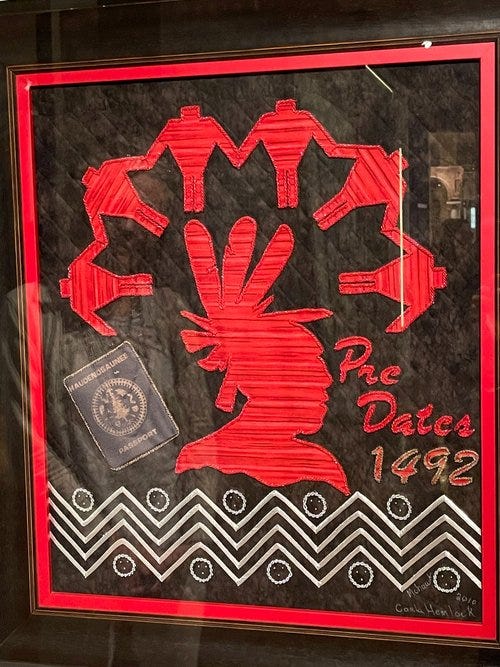
Hemlock’s contributions have garnered national recognition, and her work is displayed in prestigious institutions such as the Smithsonian’s National Museum of the American Indian and the Heard Museum. The Southwestern Association for Indian Arts awarded her a 2013 Fellowship, acknowledging her influence as both a cultural ambassador and a pioneering artist (Southwestern Association for Indian Arts). Hemlock’s art not only preserves Mohawk tradition but also inspires dialogue on Indigenous rights, environmental sustainability, and the need for reconciliation in North America.
Her dedication to advocacy extends beyond her art. Hemlock participates in workshops, exhibitions, and community programs that emphasize the importance of cultural preservation and youth education. By using her platform to engage with these issues, Hemlock has inspired a generation of Indigenous artists to incorporate activism into their own work, furthering the impact of her legacy on Native art and culture (Smith 250).
Carla Hemlock’s quilts stand as a testament to the enduring spirit of Indigenous identity and resistance. Her art is more than a visual expression; it is a form of storytelling, a means of protest, and an assertion of cultural pride. By blending traditional Haudenosaunee quilting with modern themes, Hemlock offers a unique perspective that bridges past and present, inviting both Native and non-Native audiences to engage with the complexities of Indigenous experience. Her work will continue to inspire future generations, reminding us of the importance of art as a vehicle for social change.
References:
Hinton, Leanne. Indigenous Languages and the Promise of Quilting as Cultural Preservation. American Indian Quarterly, 2020.
National Museum of the American Indian. Carla Hemlock’s Quiltwork and its Social Commentary. Smithsonian Institution, 2019.
Smith, Jason. Mohawk Activism and the Artistic Expression of Carla Hemlock. Journal of Native American Art History, vol. 45, no. 2, 2018, pp. 232-250.
Southwestern Association for Indian Arts. Carla Hemlock: Recipient of the 2013 Fellowship. SWAIA Journal, 2013.