
Beatriz Milhazes
#HispanicHeritageMonth

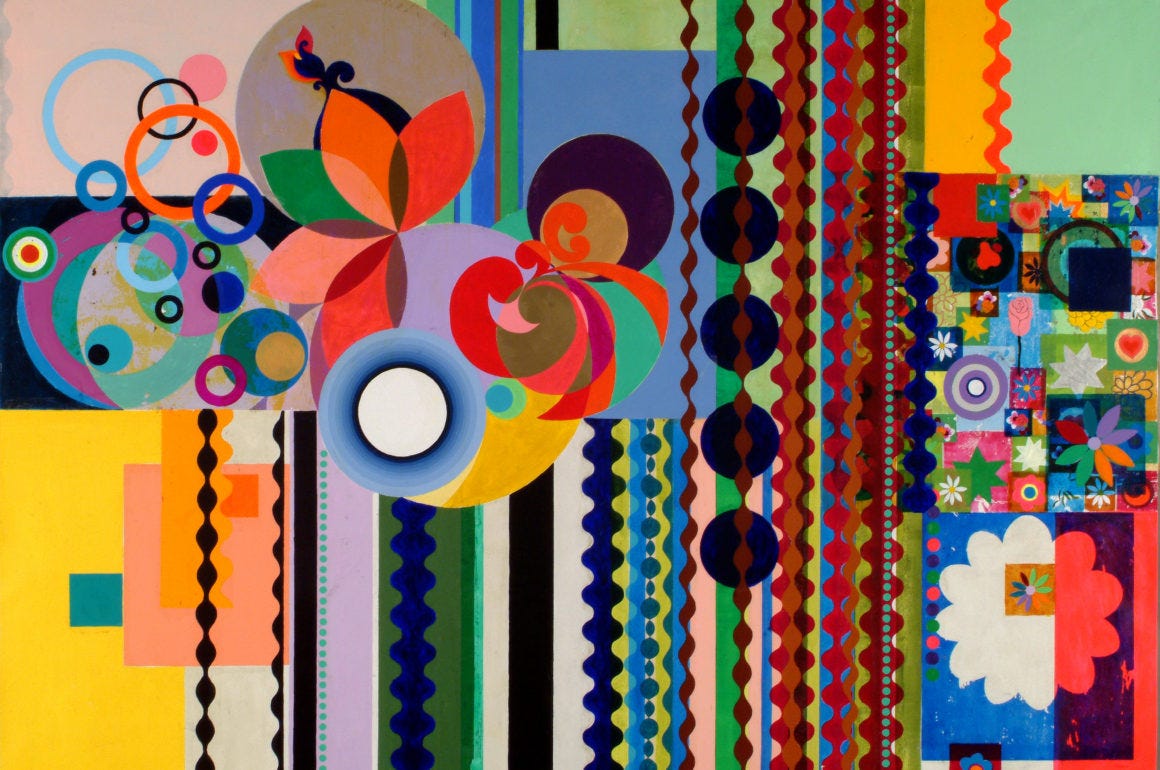
Beatriz Milhazes, born in Rio de Janeiro in 1960, is one of Brazil’s most celebrated contemporary artists. Her work, characterized by vibrant colors, intricate patterns, and an exploration of cultural identity, straddles the lines between Latin American, Hispanic, and global artistic traditions. As a Hispanic artist with deep roots in Brazilian culture, Milhazes blends elements of European Modernism, Baroque ornamentation, and Brazilian popular culture, resulting in a unique and dynamic aesthetic.
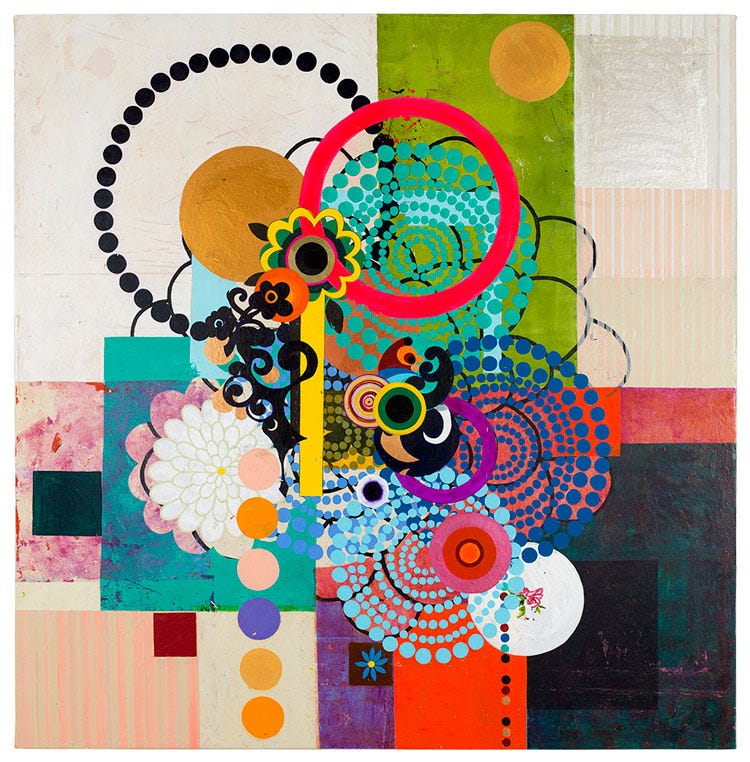
Milhazes’ artistic style is deeply influenced by the rich cultural tapestry of Brazil, where European, African, and Indigenous traditions merge. Growing up in Rio de Janeiro, she was exposed to the vibrant colors and exuberant forms of Brazilian popular culture, including carnival, tropical flora, and the Baroque architecture that is emblematic of colonial Latin America. Her work is also influenced by European Modernism, particularly the works of artists like Henri Matisse, Sonia Delaunay, and Piet Mondrian, whose abstract, geometric styles informed Milhazes’ own approach to composition and color.
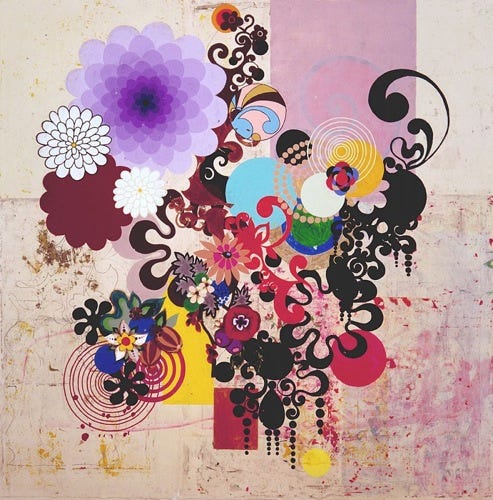
Milhazes is often described as a “maximalist” artist due to her use of dense, layered compositions filled with overlapping patterns, florals, and circular motifs. This aesthetic sensibility is rooted in her exposure to Brazil’s lush natural environment and the opulent visual culture of the Baroque. In her work, Milhazes marries the seemingly contradictory elements of exuberant ornamentation with the rigid formalism of geometric abstraction, creating a dialogue between European Modernist traditions and Latin American aesthetics.
Another significant influence on Milhazes’ work is the Brazilian artistic movement known as Tropicália, which emerged in the 1960s and was characterized by its embrace of cultural hybridity, syncretism, and resistance to Western hegemony. Tropicália artists sought to challenge dominant artistic paradigms by incorporating elements of popular culture, folklore, and Indigenous traditions into their work. Milhazes’ colorful and complex compositions can be seen as a continuation of this tradition, as they explore questions of cultural identity and representation within a global context.
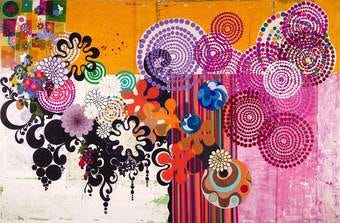
Milhazes’ creative process is as intricate as her finished compositions. She often employs a technique known as monotype printing, which involves painting motifs on plastic sheets and transferring them onto canvas. This method allows her to build up layers of color and pattern over time, giving her works a sense of depth and complexity. The transfer process also leaves behind traces of previous layers, resulting in a kind of palimpsest effect that reflects the passage of time and the accumulation of memory.

In addition to her painting practice, Milhazes has explored a variety of media, including sculpture, collage, and printmaking. Her installations and three-dimensional works often incorporate found materials, such as fabric, lace, and beads, which are common in Brazilian craft traditions. This use of mixed media reflects Milhazes’ interest in exploring the relationship between high art and popular culture, as well as the intersection of traditional and contemporary forms of artistic expression.
Milhazes’ compositions are notable for their rhythmic structure, which she compares to musical compositions. Indeed, many of her works are inspired by Brazilian music, particularly samba and bossa nova, whose syncopated rhythms find visual expression in the repetitive patterns and layered motifs that characterize her paintings. This musicality is central to the dynamism and vibrancy of her work, which often seems to pulse with life and energy.
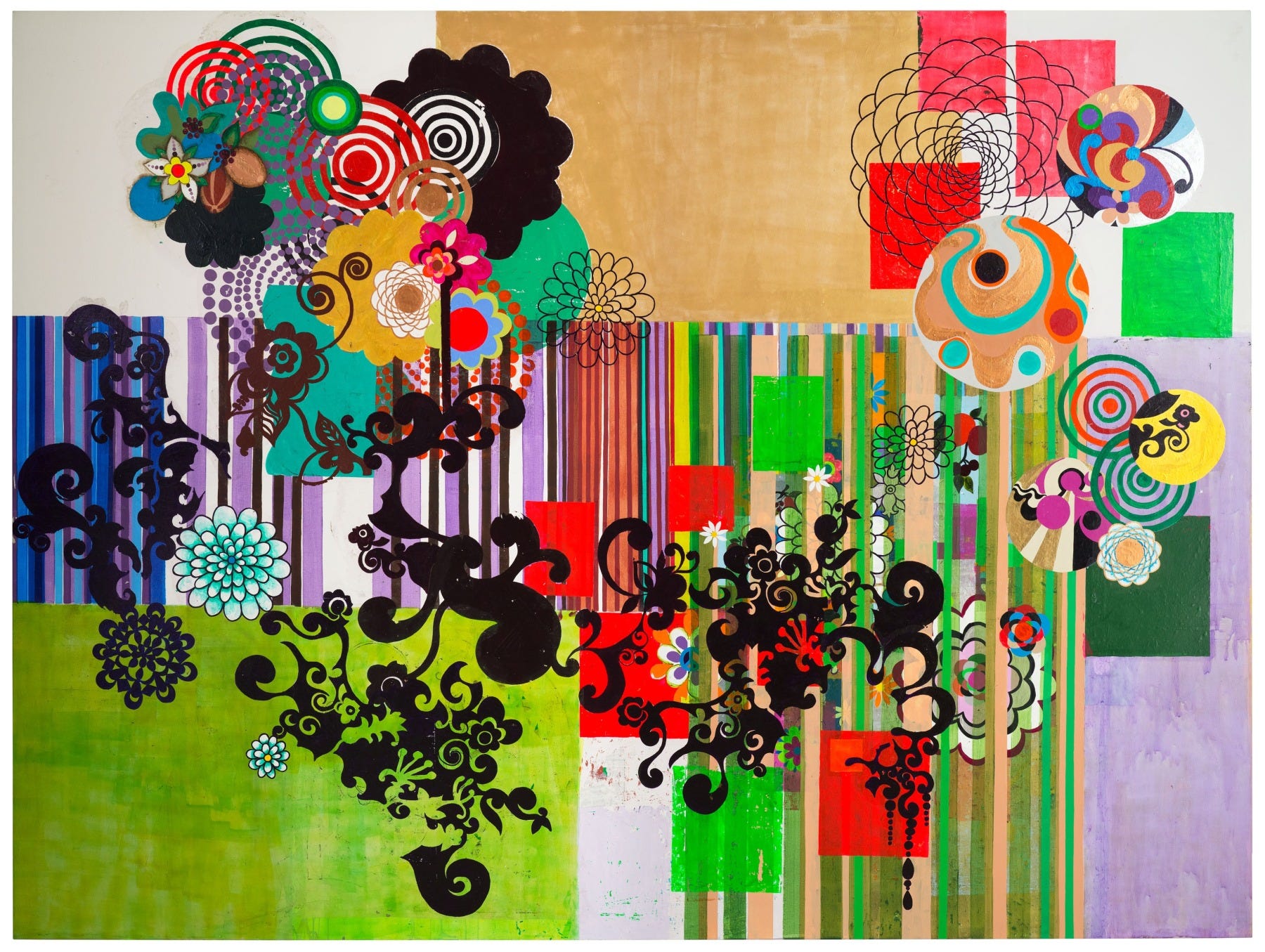
As a Brazilian artist, Milhazes occupies a unique position within the broader category of Hispanic art. Although Brazil is primarily a Portuguese-speaking country, it shares many cultural and historical ties with other Latin American nations, particularly in its colonial past and its complex racial and cultural dynamics. Milhazes’ work reflects this intersection of European, African, and Indigenous influences, which is central to the Latin American—and by extension, Hispanic—experience.
Milhazes’ use of Baroque motifs, for example, speaks to the legacy of colonialism in Latin America, where European artistic traditions were imposed on Indigenous and African cultures. However, rather than simply replicating these forms, Milhazes reinterprets them through a contemporary lens, infusing them with the vibrant colors and patterns of Brazilian popular culture. In doing so, she asserts the validity of Latin American visual traditions within the global art world, challenging the dominance of Western artistic paradigms.
At the same time, Milhazes’ work transcends national and regional boundaries, engaging with broader questions of identity, representation, and globalization. Her use of abstraction and formalism places her in dialogue with the international art scene, while her emphasis on color and ornamentation speaks to the particularities of her cultural background. This dual engagement with both local and global artistic traditions is a hallmark of Milhazes’ practice and is emblematic of the ways in which contemporary Hispanic artists navigate the complexities of identity in an increasingly interconnected world.
Milhazes’ work has been exhibited in major museums and galleries around the world, including the Museum of Modern Art in New York, the Fondation Cartier in Paris, and the Tate Modern in London. Her paintings are highly sought after by collectors, and her large-scale installations have been commissioned for public spaces in cities such as São Paulo, Tokyo, and New York.
Milhazes has also been the subject of several important retrospectives, including a major exhibition at the Pérez Art Museum Miami (PAMM) in 2014 titled Jardim Botânico. This exhibition, which featured over 50 of her works, highlighted the evolution of her artistic practice over the past three decades and solidified her reputation as one of the most important contemporary artists working today. In 2020, her work was included in the inaugural exhibition of the Museu de Arte de São Paulo’s (MASP) new building, further cementing her status as a leading figure in the Brazilian and international art scenes.
One of Milhazes’ most significant contributions to contemporary art is her ability to bridge the gap between abstraction and ornamentation. In a global art world that has often privileged the austere formalism of Modernism, Milhazes’ work challenges the notion that decoration is secondary or superficial. Her use of intricate patterns, bold colors, and references to popular culture elevates ornamentation to a central place in contemporary artistic discourse, while also celebrating the richness and diversity of Latin American visual traditions.
Beatriz Milhazes is a pivotal figure in the contemporary art world, whose work defies easy categorization. As a Hispanic artist, her work reflects the complex cultural dynamics of Brazil and Latin America, while also engaging with global artistic traditions. Her vibrant compositions, which draw on the rich visual culture of Brazil, as well as European Modernism, Baroque ornamentation, and contemporary abstraction, challenge dominant artistic paradigms and assert the importance of Latin American visual traditions in the global art world.
Through her use of color, pattern, and form, Milhazes creates works that are both aesthetically captivating and conceptually rich, offering viewers a meditation on cultural identity, memory, and the passage of time. As her work continues to gain recognition on the international stage, Milhazes remains a vital voice in the ongoing conversation about the role of culture and identity in contemporary art.
References
Araújo, Emanoel. "Beatriz Milhazes: Tradition and Transgression in Brazilian Art." Art Nexus, vol. 64, no. 1, 2015, pp. 24-31.
Fitz, Angelica. "The Geometries of Color: Beatriz Milhazes and the Rhythm of Abstraction." Art in America, vol. 100, no. 2, 2012, pp. 36-45.
Green, Charles. "Beatriz Milhazes: Painting, Ornament, and the Decorative in Contemporary Art." The Journal of Modern Art Studies, vol. 78, no. 4, 2016, pp. 112-130.
Milhazes, Beatriz. Jardim Botânico. Pérez Art Museum Miami, exhibition catalog, 2014.